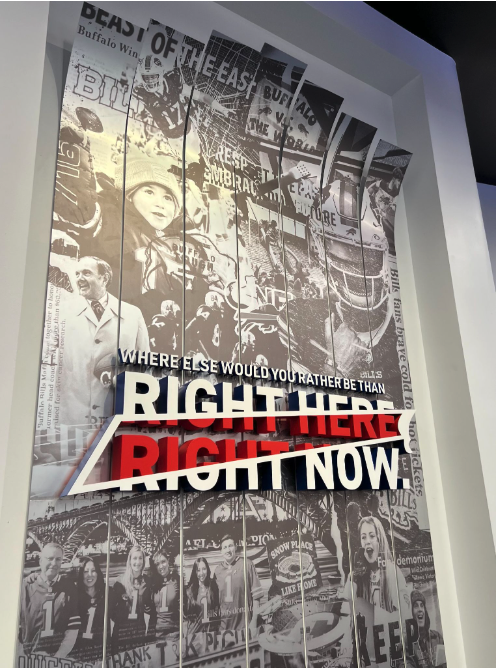
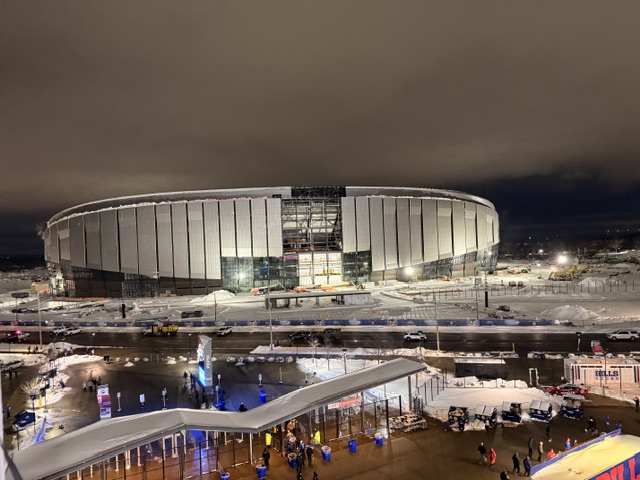
From local food and Western New York artists to giant bison and the names of 5,369 construction workers, the new Bills stadium is filled with reminders of the place it calls home.
There are plenty of ways to describe the new Highmark Stadium. It’s big. It’s modern. It’s certainly different from the building most Western New Yorkers have known for decades.
But one thing stood out to us while learning more about the new stadium that isn’t necessarily about football at all.
It feels very Buffalo.
That’s not something that happens simply because a building is located in Western New York. The new stadium could have been filled with generic concession stands, generic artwork, and the usual collection of corporate spaces. Instead, there are reminders of this region throughout the experience, and many of them come from people, businesses, and traditions that have been part of Buffalo for generations.
A Taste of Home at Highmark Stadium
Let’s start with something every Bills fan can appreciate: what’s for dinner?
There are plenty of familiar stadium staples at Highmark Stadium, but look a little closer at the menu, and you’ll find a collection of Western New York businesses and food traditions.
The stadium’s food program includes Anderson’s Frozen Custard, Chiavetta’s, Park Edge Sweet Shoppe, Babcia’s Pierogi, Half Luna Empanadas, Pham’s Kitchen, Nikki’s Chocolates and John Young’s Mumbo Wings, among others.
Some have been around for generations. Others represent newer chapters in Western New York’s increasingly diverse food culture. That’s what makes the lineup interesting.
Buffalo’s food identity has never really been just about wings and beef on weck. It’s Polish traditions, Italian traditions, Vietnamese and South Asian influences, Puerto Rican and Peruvian food, family-run bakeries, barbecue, candy makers, and neighborhood restaurants that people return to year after year.
Putting many of those businesses inside the new stadium gives fans something more personal than another place to grab a hot dog. It gives them a taste of home.
Buffalo’s Creative Community Has a Place Here, Too
The local connection doesn’t stop at the concession stands.
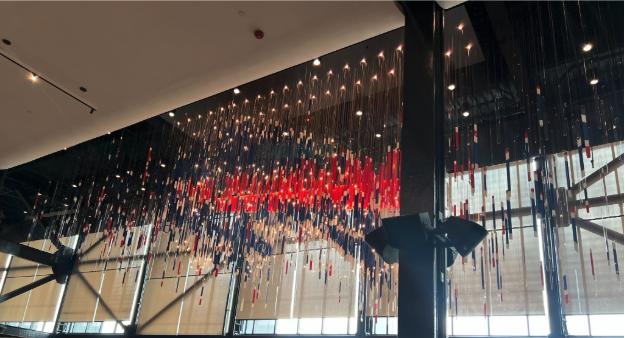
More than 45 artists and artist teams were selected to create permanent artwork throughout the stadium, with an emphasis on artists who live in or have strong connections to Buffalo and Western New York. Thousands of community members also participated in elements of the work.
For a building that will host tens of thousands of people on game days, that’s a pretty substantial showcase for Western New York’s creative community.
A football stadium could easily be designed around one thing: football. Instead, this one makes room for some of the people who help tell Buffalo’s story.
Three Very Large Buffalo Residents
Then there are the bison.
Three enormous stainless-steel sculptures, a bull, a cow and a calf, stand in the stadium’s Family Circle. They’re hard to miss and are meant to represent family, strength and resilience.
The bull is approximately 27 feet tall and 29 feet long. And these aren’t exactly your ordinary outdoor sculptures: the bull and cow can release smoke from their nostrils, while programmable lighting illuminates them at night.
It’s a fun detail, but the symbolism of the three bison is perhaps more interesting.
A bull. A cow. A calf. Three generations standing together.
That idea of generations shows up again inside the stadium, but in a way that’s much more personal.
“We Built This House”
Near the entrance to Highmark Stadium is a wall that deserves a second look.
It says:
WE BUILT THIS HOUSE
Below those words are the names of 5,369 people who helped build the stadium.
They’re not Bills legends or celebrities. They’re the tradespeople, laborers, operators, electricians and countless others who showed up and did the work. Most fans will never know their names, but every person who walks through the stadium will experience the results of what they built.
The decision to permanently display their names may be one of the most meaningful details in the entire stadium. The idea is that their children, grandchildren and future generations will be able to come back, find a family name and know that someone they loved helped build this place.
Think about that a few decades from now. A grandparent could walk into the stadium with a child, stop at the wall and point to a name.
“That’s your great-grandfather. He helped build this.”
For thousands of families, that moment may happen someday.
A stadium is usually remembered for the people who play in it, the quarterbacks, coaches, championships and big moments. But this wall is a reminder that there are thousands of other stories behind the building itself.
The people who built the stadium are now part of its history, too.
What Makes a Place Feel Like Home?
There are plenty of other Buffalo touches throughout the stadium.
Some of the food markets take their names from Buffalo neighborhoods, including North Park, Black Rock, Five Points, Allentown, Kaisertown and Humboldt.
Peppers grown in Buffalo-based greenhouses are being used for the stadium’s signature house hot sauces through a partnership with Urban Fruits & Veggies and Buffalo Go Green.
Even the building itself takes Western New York seriously, with a canopy and snow-melt system designed with our particular climate in mind.
None of those things, by themselves, makes a building “Buffalo.” Together, though, they start to.
That’s what we find interesting about the new Highmark Stadium. It’s obviously a new building, but a lot of thought has gone into making sure it doesn’t feel disconnected from the place around it.
The food comes from local businesses. The artwork comes from local artists. The neighborhood names come from familiar communities. The bison reflect regional identity. And the names of thousands of people who physically built the stadium will remain there for future generations to see.
It will take years before we know what the new stadium ultimately means to Buffalo. There will be games that people talk about for decades. Kids will have their first Bills game there. Families will establish new traditions. Players will become part of Bills history.
But somewhere along the way, someone will probably walk past that wall of names with a child or grandchild, point to one of them, and say: “That’s your great-grandfather. He helped build this.”
And maybe that’s what makes the new Highmark Stadium feel so distinctly Buffalo.
It’s not just a new place to make memories. It’s a place built to remember where we came from.
That’s our 716 Perspective.
What’s one distinctly Buffalo detail you’ve noticed, or would like to see, at the new Highmark Stadium?
We’d love to hear it.